
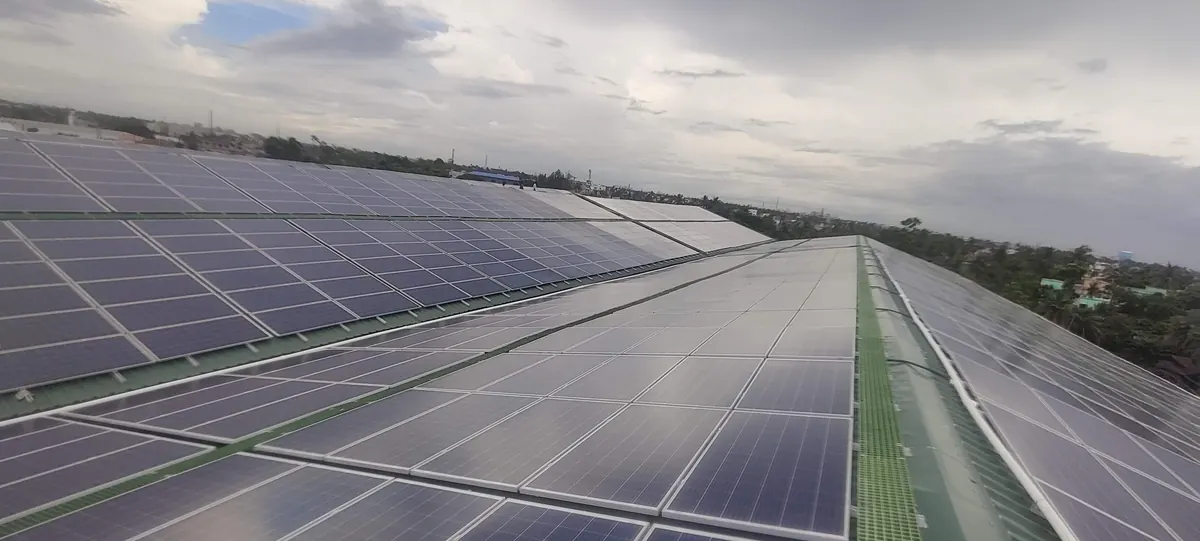
In 2026, a commercial rooftop solar plant in India typically costs between Rs 30,000 and Rs 50,000 per kW installed, with larger plants at the lower end of that range. Most businesses that use power during the day recover their investment in about 3 to 5 years, helped by 40% accelerated depreciation in the first year, and the plant then keeps generating for 25 years or more. There is no central government subsidy for commercial rooftop solar, but businesses can reduce costs through tax benefits, lower GST on solar modules and zero-investment models such as OPEX and leasing.
Why are Indian businesses switching to solar in 2026?
Commercial and industrial electricity tariffs in India are among the highest in the power system, because they cross-subsidise residential and agricultural users. For a factory, warehouse or cold storage running through the day, electricity is often the second or third largest operating cost after raw material and wages, and it rises almost every year with new tariff orders.
Solar changes that equation. Once a plant is installed on your roof or land, the sunlight it uses is free, so the cost of every unit it generates is fixed for the life of the plant. That is why rooftop and open access solar are growing so quickly. India added 6.6 GW of rooftop solar in the first half of 2026 alone, and a record 3 GW of open access solar in the second quarter of 2026, taking open access capacity to 36 GW, according to Mercom India Research.
How much does commercial solar cost in India in 2026?
The cost of a grid-connected commercial rooftop plant depends mainly on its size, the type of roof, the quality of components and how far the plant is from the point where it connects to your electrical system. As a planning guide, these are typical installed price ranges in 2026:
| Plant size | Typical use | Indicative cost per kW |
|---|---|---|
| 20 to 100 kW | Offices, schools, hospitals, small factories | Rs 40,000 to Rs 50,000 |
| 100 to 500 kW | Mid-size factories, warehouses, cold storages | Rs 33,000 to Rs 42,000 |
| 500 kW to 1 MW and above | Large manufacturing units, industrial parks | Rs 28,000 to Rs 35,000 |
These are indicative ranges for planning only. Your actual price depends on a site survey, and module prices have been moving in 2026 because of new domestic manufacturing rules, explained below.
A quality proposal should include solar modules, inverters, mounting structures, cabling, earthing and lightning protection, monitoring, installation, net metering or grid connection approvals and a defined period of operation and maintenance. When you compare quotes, always compare what is included, not only the price per kW.
How quickly does a commercial solar plant pay for itself?
Most businesses that consume most of their electricity during daylight hours recover the full investment in about 3 to 5 years. After that, the plant continues to generate electricity for 20 years or more at almost no running cost, apart from cleaning and routine maintenance.
Here is a simple illustration for a 100 kW rooftop plant in eastern India:
| Plant size | 100 kW |
| Approximate cost | Rs 40 lakh |
| Expected generation | About 1,30,000 units a year |
| Grid tariff avoided | Rs 8 per unit (assumed) |
| Annual savings | About Rs 10.4 lakh |
| Simple payback | About 3.8 years, shorter after tax benefits |
This is an illustration with assumed values. Generation varies by location, roof orientation and shading, and tariffs vary by state and consumer category. We calculate the actual figures for your site during the assessment.
The payback is faster when your tariff is higher, when you consume most of the solar power yourself rather than exporting it to the grid, and when you use the accelerated depreciation benefit described below.
What tax benefits can businesses claim on solar?
Accelerated depreciation. Solar power generating systems qualify for depreciation of 40% on the written down value under the Income-tax law. From 1 April 2026, this provision sits in Section 33 of the new Income-tax Act, 2025, which replaced Section 32 of the 1961 Act. Claiming 40% of the plant's value as a deduction in the first year lowers your taxable profit and can shorten the payback period by several months. Manufacturing units may also be eligible for additional depreciation, depending on their tax regime.
Lower GST on solar modules. From 22 September 2025, the GST Council reduced GST on solar cells and modules from 12% to 5%. When modules are supplied and installed under one contract, 70% of the value is treated as goods at 5% and 30% as services at 18%, which works out to an effective rate of about 8.9% on the project. Businesses registered under GST may be able to claim input tax credit, depending on how the plant is used.
Tax rules depend on your business structure and tax regime. Please confirm the exact benefit with your chartered accountant before you invest.
Is there a government subsidy for commercial solar?
No central subsidy is currently available for commercial and industrial rooftop solar. The PM Surya Ghar Muft Bijli Yojana subsidy applies only to residential homes. Some states have offered incentives for MSMEs or specific sectors from time to time, so it is worth checking your state's current solar policy.
For most businesses, the bigger financial levers are accelerated depreciation, lower GST, net metering and the choice of financing model. A well-designed plant on the right model usually delivers better returns than any one-time subsidy would.
What changed for solar projects in 2026?
The Ministry of New and Renewable Energy (MNRE) has brought in ALMM List-II for solar cells. For net-metered and open access projects, it applies to plants commissioned from 1 January 2027, after MNRE extended the earlier deadline of 1 June 2026 to 31 December 2026. From that date, these projects must use modules from approved Indian manufacturers (ALMM List-I) that are also made with solar cells from approved Indian cell manufacturers (ALMM List-II). The aim is to build India's domestic solar manufacturing, but in the short term it is tightening the supply of approved cells and pushing module prices up.
For a business planning solar, this means two things. First, make sure your installer uses compliant modules, because a non-compliant plant may not get net metering approval. Second, get a fresh quotation and lock in your order once you are ready, because prices are moving more than they did in previous years.
Which businesses benefit most from commercial solar?
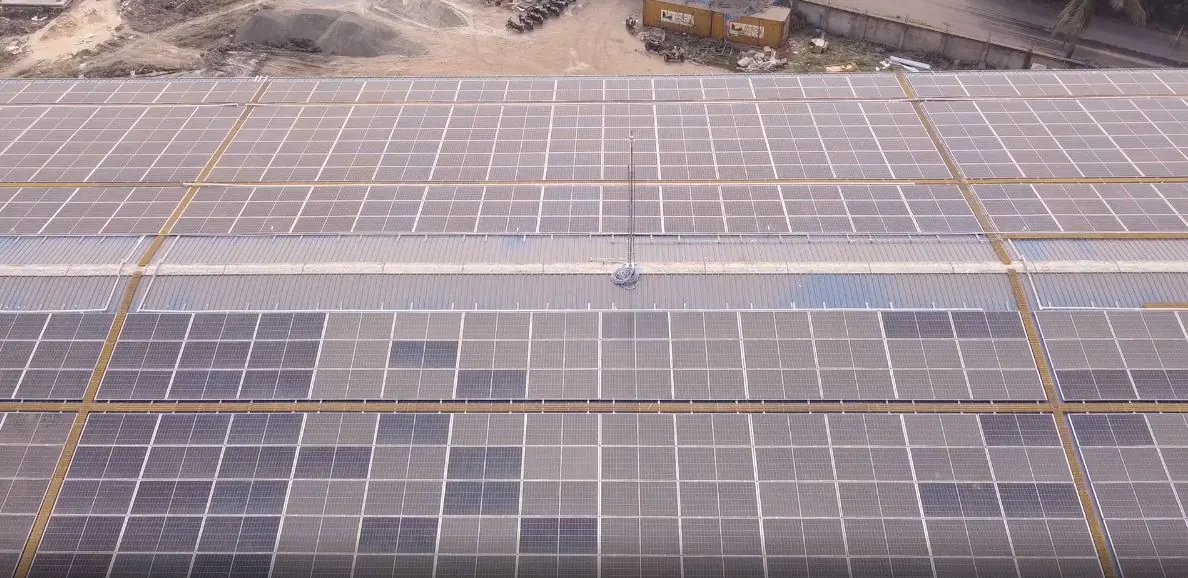
Solar delivers the strongest returns for businesses that use a lot of electricity during the day and have a large, shadow-free roof or open land. These include:
- Manufacturing plants and engineering units
- Warehouses, logistics hubs and cold storages
- Jute, textile, plastics and steel processing units
- Hospitals, hotels and educational institutions
- Office campuses and commercial complexes
Businesses without enough roof space, or with very large power demand, can still go solar through open access solar, where power is generated at a solar plant elsewhere and delivered to your facility through the grid.
Can a business go solar without paying upfront?
Yes. Under the OPEX model, a third-party investor builds, owns and maintains the plant on your roof, and you simply pay for the solar power at a fixed tariff that is lower than your grid tariff, usually saving 10% to 30% from the first month. Under the leasing model, you pay a fixed monthly lease rent and can claim GST input credit. Businesses that prefer the highest long-term savings and full ownership choose the CAPEX model.
Is commercial solar worth it in 2026?
For most Indian businesses with steady daytime consumption, commercial solar remains one of the strongest investments available. It cuts operating costs, protects you from future tariff increases, adds a long-life asset to your balance sheet and helps you meet the sustainability expectations of customers and lenders. The key is to size the plant on your real consumption, use compliant, good quality components and choose the financing model that matches your priorities.
Frequently asked questions
How much does a 100 kW commercial solar plant cost in India?
In 2026, a 100 kW commercial rooftop solar plant in India typically costs between Rs 33 lakh and Rs 45 lakh, depending on the roof type, component quality and scope of work. The final price is confirmed after a site survey.
What is the payback period for commercial solar in India?
Most businesses that use their electricity during the day recover their investment in about 3 to 5 years. Higher tariffs, high self-consumption and the 40% accelerated depreciation benefit shorten the payback period.
Is there a subsidy for commercial rooftop solar in India?
There is no central government subsidy for commercial or industrial rooftop solar. The PM Surya Ghar subsidy is only for residential homes. Businesses benefit instead from 40% accelerated depreciation, 5% GST on solar modules and zero-investment financing models.
What is the GST on solar panels in 2026?
Since 22 September 2025, solar cells and modules attract 5% GST. For a combined supply and installation contract, the effective GST works out to about 8.9% because 30% of the contract value is treated as a service taxed at 18%.
How much can a business save with rooftop solar?
Savings depend on plant size, tariff and how much of the solar power you use yourself. As an example, a 100 kW plant generating about 1,30,000 units a year can save around Rs 10 lakh a year at a grid tariff of Rs 8 per unit.
Want to know what solar would save your business?
Share your electricity bill and our engineers will send you a free assessment with savings, payback and the right financing model for your site.
Get a Free Assessment WhatsApp Us